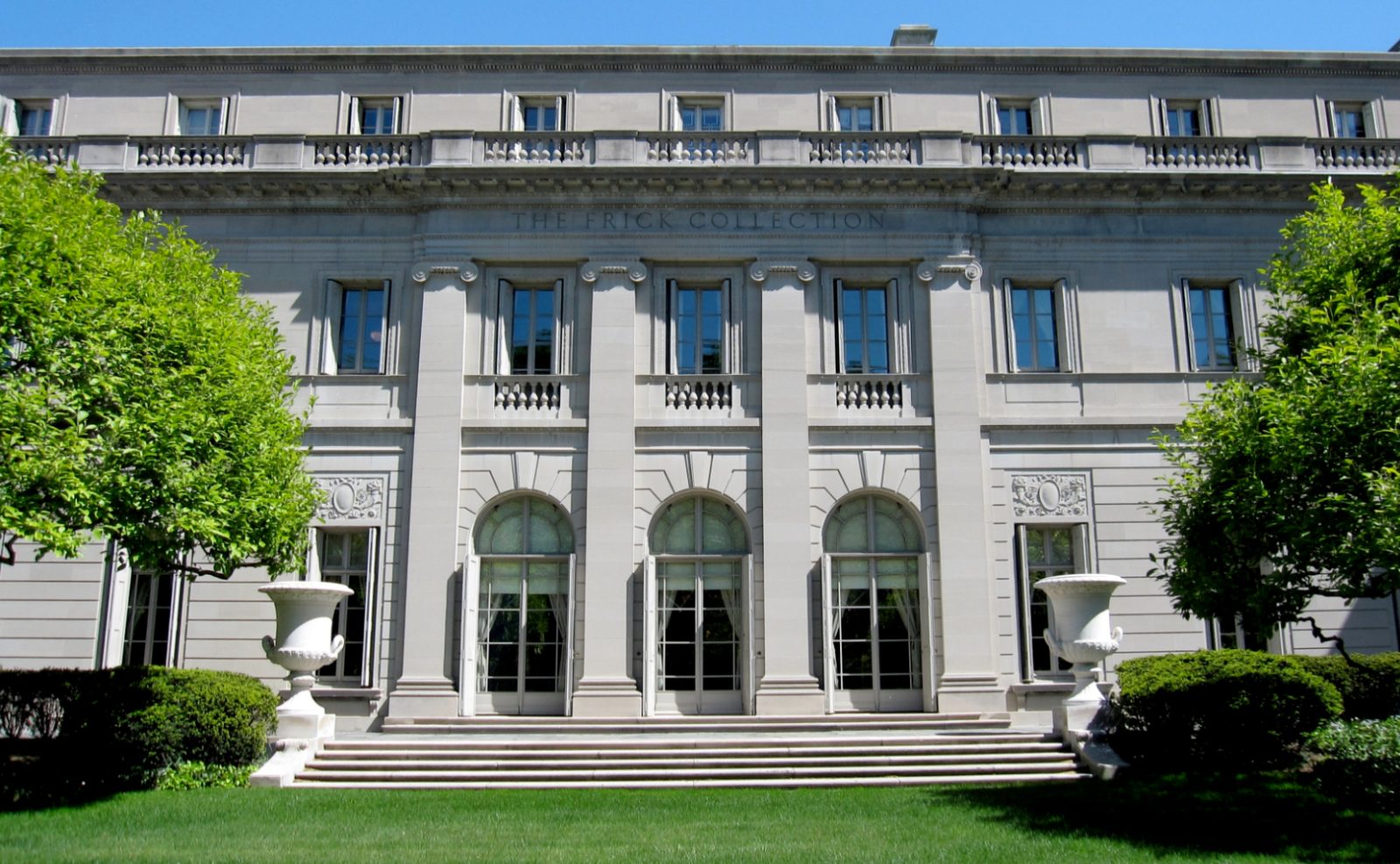
The Frick Collection
Formerly the Henry Clay Frick House, this residence features a courtyard and ornate galleries designed in the Beaux-Arts style.
View the limestone facade from the street for exterior details.
Fifth Avenue between 42nd and 110th Streets preserves the greatest concentration of Gilded Age architecture in Manhattan. This guide maps the route, identifies the mansions still standing, and explains how to navigate the avenue on your own schedule.
Quick answer
A gilded age walking tour nyc self guided along Fifth Avenue is free to walk at any hour, though the best window for viewing architecture and avoiding commuter crowds is 09:00–16:00. The route spans roughly three miles from the former Vanderbilt Triple Palace site at 51st Street north to Andrew Carnegie's mansion at 91st Street, now the Cooper Hewitt museum. Most facades remain visible from the sidewalk year-round.
Between 1870 and 1910, Fifth Avenue north of 42nd Street transformed from a dirt carriage road into the wealthiest residential corridor in America. The Vanderbilt family alone commissioned five limestone palaces between 51st and 58th Streets, each designed by Richard Morris Hunt or George B. Post to rival the châteaux of the Loire Valley. William K. Vanderbilt's French Renaissance mansion at 660 Fifth Avenue set the template in 1882, signaling that Gilded Age fortunes demanded European grandeur transposed to Manhattan bedrock. A gilded age walking tour nyc self guided lets you move at your own pace and linger where the details warrant attention. Start at the site of the Vanderbilt Triple Palace, demolished in the 1920s but marked by its successor buildings near 51st Street. Walk north past the former sites of the Astor and Rockefeller residences, many replaced by midcentury towers but documented in bronze plaques set into the sidewalk. The Cartier Mansion at 52nd Street, originally built for Morton Plant in 1905, survives intact and remains one of the few accessible interiors from the era. Further north, the Frick Collection at 70th Street occupies Henry Clay Frick's 1914 mansion, preserving both the Beaux-Arts shell and its original art galleries. Beyond 79th Street, the avenue enters the Carnegie Hill district, named for Andrew Carnegie's Georgian Revival townhouse at 91st Street. That structure now houses the Cooper Hewitt Smithsonian Design Museum, offering the rare chance to walk through a mansion's original floor plan. The route includes scattered survivors like the James B. Duke House at 78th Street and the Otto Kahn residence at 91st, both converted to institutional use but retaining their limestone facades and iron gates. Most Gilded Age interiors are closed to the public, but the exteriors concentrate enough carved detail, sculptural ornament, and massing to convey the era's ambitions. Walking the full length requires two to three hours, depending on how often you stop to photograph cornices or consult historical markers.
“The Vanderbilt family alone commissioned five limestone palaces between 51st and 58th Streets, each designed to rival the châteaux of the Loire Valley.”
The best arrival window for your Gilded Age walking tour is 09:00–16:00. Visiting during these hours allows you to avoid midtown peak commuter traffic while providing sufficient natural light to observe the intricate architectural details of Fifth Avenue.
Mild temperatures, 55°F to 70°F. Ideal for outdoor walking and viewing facades in soft light.
Warm, 75°F to 85°F. Plan for early starts to manage heat and foot traffic.
Cool, 60°F to 75°F. The clear autumn light enhances the textures of historic masonry.
—
Arriving at 09:00 minimizes congestion and facilitates a focused, self-paced exploration.
Verdict: Tuesday to Thursday, arriving at 09:00, in April or October offers the most favorable conditions for architectural viewing.
Fifth Avenue serves as the central artery for your Gilded Age exploration, stretching through the heart of Manhattan. The most efficient way to access the start of your route is via the New York City subway system.
N, R, or W lines to Fifth Avenue/59th Street Station
B, D, F, or M lines to 47th-50th Streets-Rockefeller Center
M1, M2, M3, or M4 lines along Fifth Avenue
For an ideal start to your tour, disembark at the 59th Street station to approach the avenue from the south near Central Park. Public transit is recommended as street parking is extremely limited.
The Gilded Age left an architectural legacy along Fifth Avenue defined by grand mansions and institutional structures designed to showcase immense wealth. These landmarks offer a tangible look at the residential and social spaces of New York City’s elite during the late 19th and early 20th centuries.
Formerly the Henry Clay Frick House, this residence features a courtyard and ornate galleries designed in the Beaux-Arts style.
View the limestone facade from the street for exterior details.
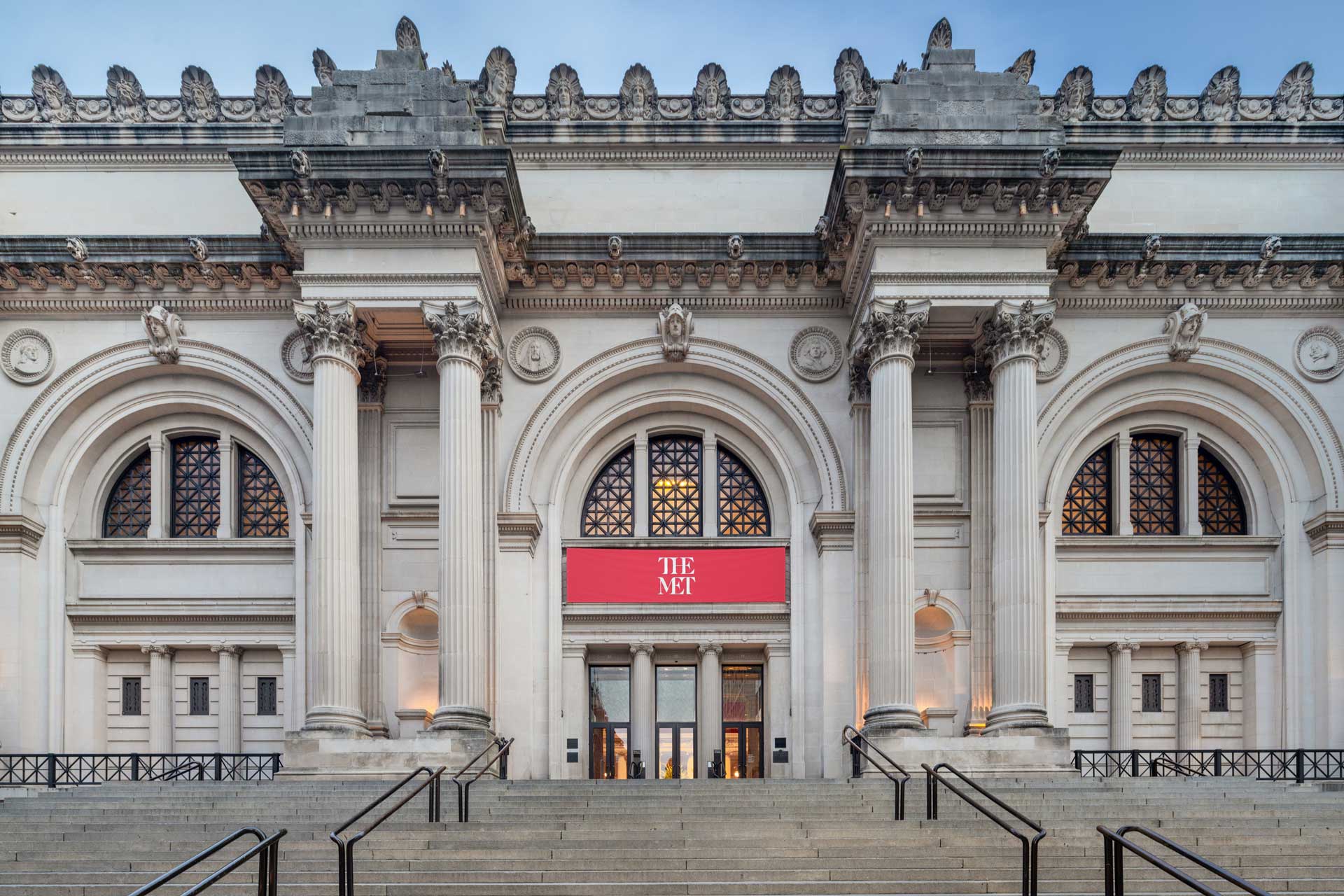
While expanded over time, the original Great Hall and grand staircase reflect the monumental design aspirations of the era.
Observe the Beaux-Arts stone facade from Fifth Avenue.
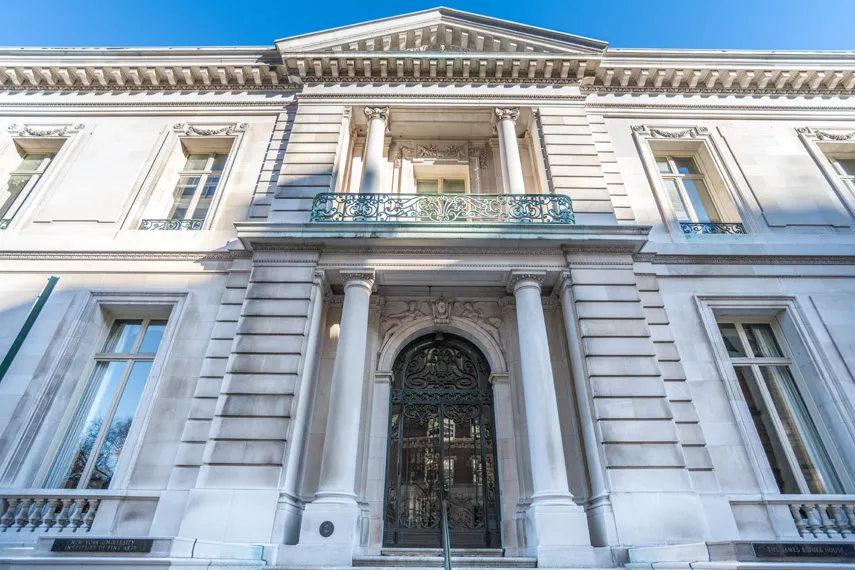
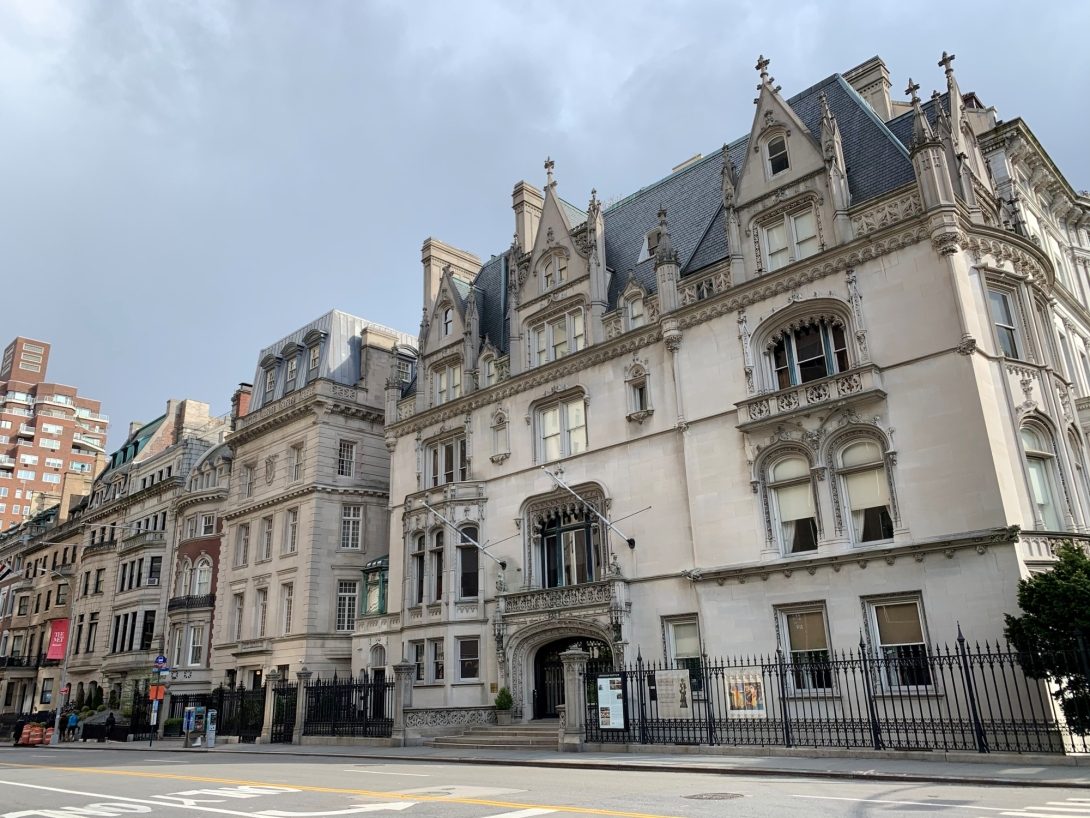
This mansion, modeled after an 18th-century French chateau, serves as an example of the residential opulence once common on the avenue.
Look up at the classical limestone carvings and roofline.
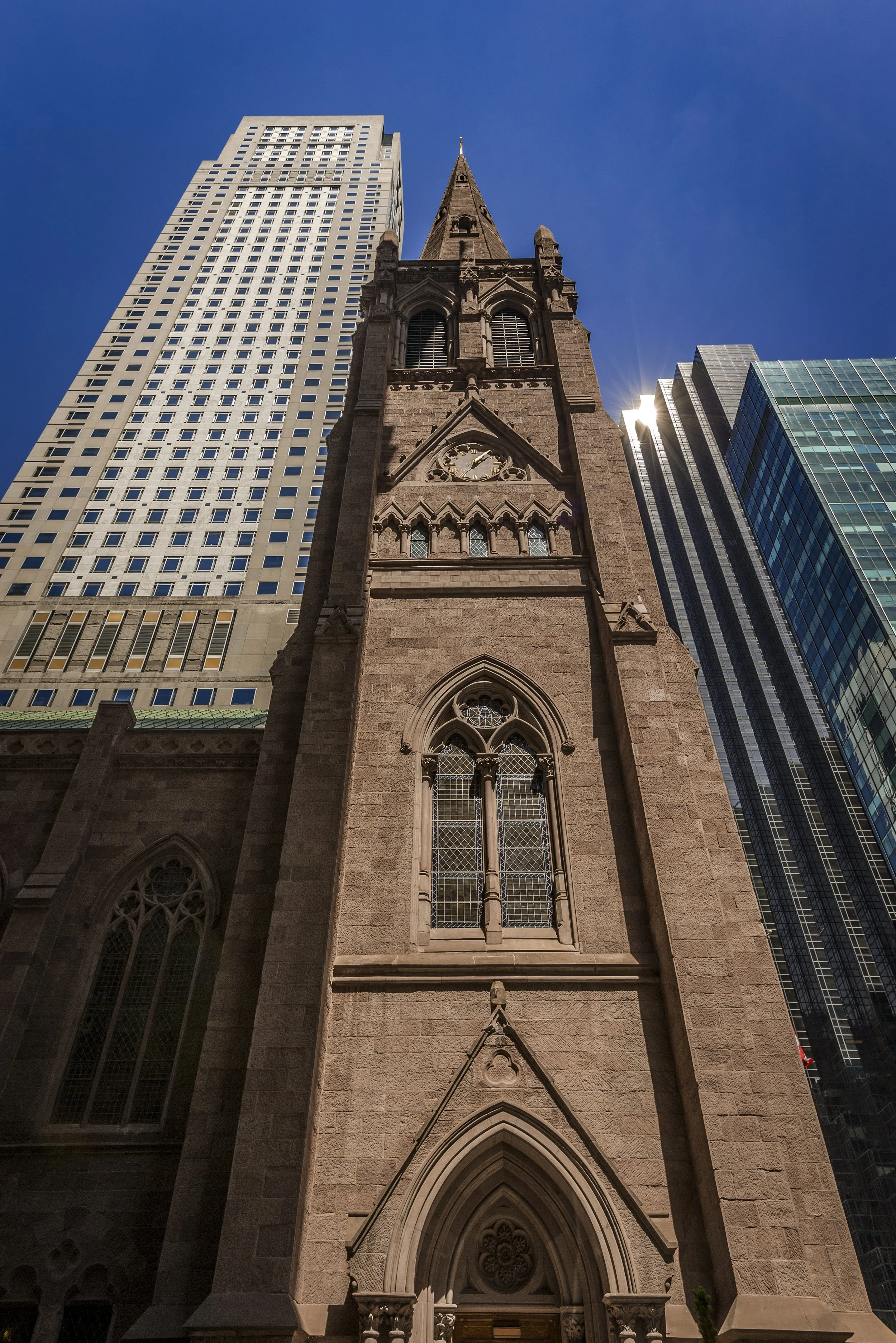
Constructed in 1875, this Gothic Revival structure represents the religious institutions that served the wealthy families of the Gilded Age.
Note the intricate stonework and vertical spires.
Fifth Avenue emerged as New York's premier residential corridor in the 1850s when merchant families built brownstones north of Washington Square. By 1882, William Henry Vanderbilt commissioned a twin-mansion complex at 51st Street, signaling the avenue's transformation into a showcase of industrial wealth. The corridor between 50th and 59th Streets became known as Millionaires' Row, where Astors, Whitneys, and Goulds erected limestone châteaux designed by Richard Morris Hunt and McKim, Mead & White. The 1893 completion of Caroline Schermerhorn Astor's residence at 65th Street anchored the avenue's northward expansion. Andrew Carnegie's 1901 mansion at 91st Street pushed the frontier of fashionable society even farther uptown. Simultaneously, commercial pressure from below transformed lower Fifth Avenue. By 1906, Benjamin Altman relocated his department store to 34th Street, breaching the residential exclusivity south of 42nd Street. The 1913 opening of the Woolworth Building and subsequent skyscraper construction accelerated the avenue's commercial character below Central Park. Henry Clay Frick's 1914 mansion at 70th Street represented one of the era's final grand commissions. Today, a gilded age walking tour nyc self guided reveals surviving architectural fragments along the corridor. The Frick Collection preserves its original residence. Carnegie's mansion houses the Cooper Hewitt museum. Streetscapes between 59th and 72nd Streets retain period façades, while plaques mark demolished Vanderbilt and Astor sites. The New York self-guided walking tour through Gilded Age landmarks allows visitors to trace the Avenue's evolution from residential enclave to commercial spine, with architectural survivors documenting an era when industrial fortunes reshaped Manhattan's urban fabric.
Merchant families establish brownstone residences north of Washington Square, creating Fifth Avenue's first fashionable district.
William Henry Vanderbilt commissions twin mansions at 640-642 Fifth Avenue, establishing Millionaires' Row between 50th and 59th Streets.
Caroline Schermerhorn Astor's mansion at 65th Street anchors the avenue's northward expansion of elite residences.
Andrew Carnegie completes his Georgian mansion at 91st Street, pushing the frontier of fashionable society into the Upper East Side.
Benjamin Altman's department store opens at 34th Street, marking the beginning of commercial encroachment on residential Fifth Avenue.
Henry Clay Frick's mansion at 70th Street represents one of the era's final grand residential commissions before zoning changes.
Everything you need to know about gilded age walking tour nyc self guided
Yes, this activity is accessible to pedestrians of all ages interested in history. Visitors can set their own pace while exploring the exterior of iconic townhouses and cultural institutions along the route.
You should aim to begin between 09:00 and 16:00 to avoid midtown commuter traffic. This window ensures optimal daylight for viewing the ornate masonry and limestone facades along the avenue.
There is no entrance fee required to walk the avenue itself, as it is a public thoroughfare. The experience is entirely free to enjoy independently, though some internal museum visits may require separate admission.
Most visitors find that dedicating several hours allows for a thorough exploration of the major landmarks. Taking your time ensures you can properly observe the intricate details of late 19th-century residential design.
Yes, a self-guided itinerary provides the freedom to view these Gilded Age landmarks at your own convenience. You can easily navigate the corridor to see former private residences that now serve as institutions or gallery spaces.
The most frequent error is rushing the route without pausing to examine the architectural styles or the history of the families who built them. Slowing down allows for a better appreciation of the design elements that define this era of New York history.